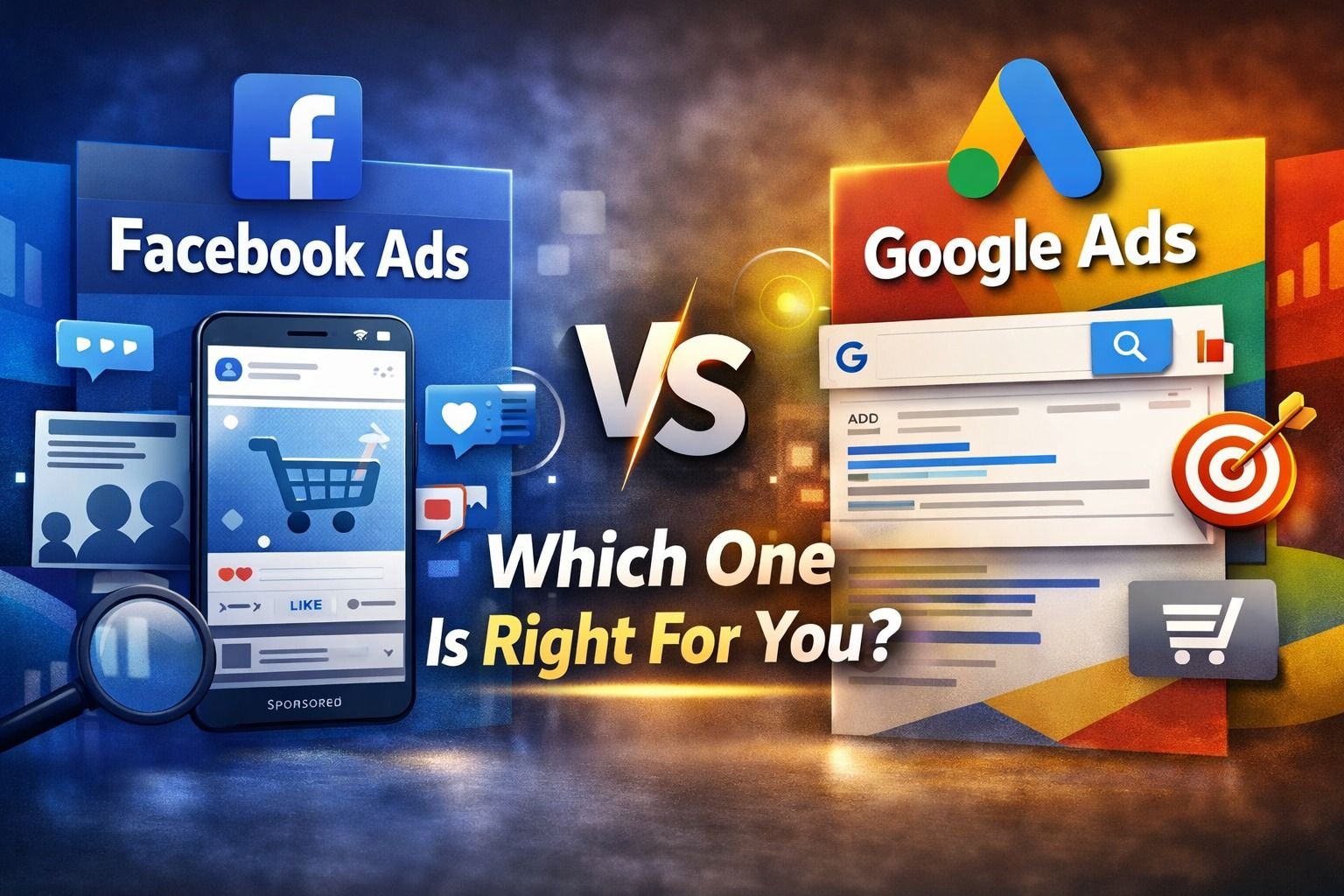
In today’s performance-driven digital landscape, paid advertising is no longer optional—it is a strategic growth lever. Among all paid traffic channels, Facebook Ads vs Google Ads both dominate the market. However, choosing the right platform depends on your business objectives, target audience, budget, and sales funnel maturity.
This guide provides a clear, data-driven comparison to help you determine which advertising platform delivers the highest return on investment for your business.
Understanding Facebook Ads
Facebook Ads operate within the Meta ecosystem, including Facebook, Instagram, Messenger, and Audience Network. This platform is built around audience targeting and brand discovery.
Key Advantages of Facebook Ads
- Advanced audience targeting based on interests, behaviors, demographics, and custom data
- Ideal for brand awareness, lead generation, and retargeting
- Visually engaging ad formats (image, video, carousel, reels)
- Cost-effective reach for cold audiences
Best Use Cases
- New brands building market presence
- E-commerce and lifestyle products
- Local businesses targeting specific demographics
- Lead generation for service-based businesses
Facebook Ads are particularly effective when your audience may not be actively searching but can be influenced through compelling visuals and messaging.
Understanding Google Ads
Google Ads focuses on search intent. Your ads appear when users actively search for specific products or services on Google, YouTube, and partner websites.
Key Advantages of Google Ads
- High-intent traffic with strong conversion potential
- Immediate visibility on Google Search results
- Multiple ad types: Search, Display, Shopping, YouTube
- Full control over keywords and bidding strategies
Best Use Cases
- Businesses offering solutions to urgent needs
- High-ticket products or professional services
- Local services targeting “near me” searches
- Companies focused on direct sales and ROI
Google Ads are best suited for capturing demand rather than creating it.
Facebook Ads vs. Google Ads: Core Differences
| Feature | Facebook Ads | Google Ads |
|---|---|---|
| User Intent | Passive | Active |
| Targeting | Interest & behavior-based | Keyword & intent-based |
| Best For | Brand awareness & nurturing | Lead & sales conversion |
| Cost Structure | Generally lower CPC | Higher CPC, higher intent |
| Funnel Stage | Top & middle of funnel | Bottom of funnel |
Which Platform Should You Choose?
The right choice depends on your business goals:
- Choose Facebook Ads if your objective is brand visibility, audience engagement, lead nurturing, or product discovery.
- Choose Google Ads if your priority is immediate leads, direct sales, and targeting users ready to take action.
For most businesses, the most effective approach is using both platforms strategically—Facebook Ads to build demand and Google Ads to convert that demand.
Final Recommendation
There is no universal winner between Facebook Ads and Google Ads. Each platform serves a distinct role within a high-performing digital marketing strategy. The optimal decision is driven by data, testing, and alignment with your business objectives.
If you are seeking measurable growth, reduced ad waste, and scalable performance, working with an experienced digital marketing professional ensures your ad spend delivers consistent results.
Need Expert Ad Campaign Management?
At Pro Marketer Faisal, we design and manage high-converting Facebook and Google Ads campaigns tailored to your business goals. Our data-driven approach focuses on maximizing ROI, improving lead quality, and driving sustainable growth.
Contact us today to identify the right advertising strategy for your business and turn paid traffic into measurable revenue.