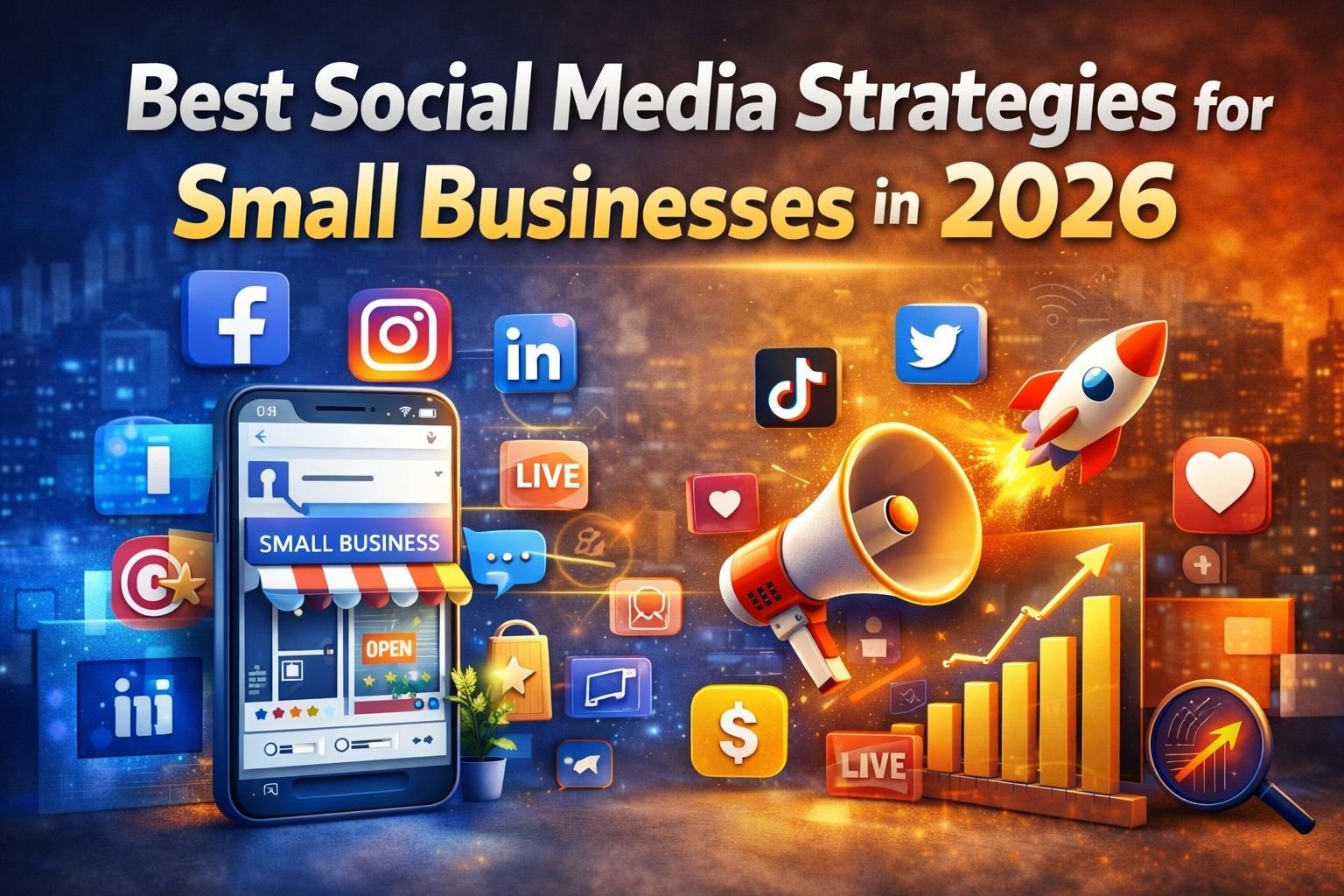
In 2026, social media is no longer just a brand awareness channel—it is a revenue-driving, trust-building, and customer-retention engine. For small businesses, success depends on adopting data-driven, platform-specific, and AI-assisted social media strategies that align with evolving consumer behavior and algorithm updates.
This guide outlines the most effective and best social media strategies for small businesses should implement in 2026 to achieve sustainable growth, measurable ROI, and long-term brand equity.
1. Prioritize Platform-Specific Content, Not Cross-Posting
Generic content no longer performs. Each platform now rewards native content optimized for user intent.
- Instagram and Facebook favor short-form video and community engagement
- LinkedIn prioritizes thought leadership and value-driven carousels
- TikTok rewards authenticity and trend participation
- X (Twitter) emphasizes real-time insights and conversations
According to insights published by Meta and HubSpot, businesses that tailor content per platform consistently outperform brands using identical posts across channels.
Action Point: Develop a unique content framework for each platform instead of repurposing blindly.
2. Leverage Short-Form Video as a Core Growth Asset
Short-form video continues to dominate social engagement and reach in 2026. Reels, Shorts, and TikToks are now central to organic visibility.
Data-backed studies from HubSpot confirm that video content delivers higher engagement rates and stronger conversion signals compared to static formats.
Best-performing video content for small businesses:
- Behind-the-scenes operations
- Educational micro-content
- Customer success stories
- Product demonstrations
Action Point: Allocate at least 40–50% of your content calendar to short-form video.
3. Focus on Community Building Over Vanity Metrics
Follower count is no longer a key success indicator. Algorithms now reward meaningful interactions, including comments, shares, saves, and DMs.
High-authority marketing research from Sprout Social highlights that brands with engaged communities achieve higher lifetime customer value and organic reach.
Community-building tactics include:
- Polls and Q&A sessions
- Comment-to-DM automation
- User-generated content (UGC)
- Private groups and broadcast channels
Action Point: Optimize content for conversations, not impressions.
4. Integrate AI Tools for Content, Analytics, and Scheduling
AI-powered tools have become standard in social media management. From caption generation to predictive analytics, automation improves efficiency without sacrificing quality.
Platforms like Google, Meta, and Hootsuite emphasize AI-driven insights to optimize posting times, ad targeting, and content performance.
Use AI to:
- Analyze audience behavior
- Identify high-performing content themes
- Optimize posting schedules
- Improve ad creatives
Action Point: Combine AI efficiency with human creativity for competitive advantage.
5. Adopt Social Commerce and Direct Selling Features
Social media platforms now function as end-to-end sales channels. Features like Instagram Checkout, Facebook Shops, and TikTok Shop allow users to purchase without leaving the app.
Industry data published by Meta Business shows that social commerce significantly reduces friction in the buyer journey.
Action Point: Integrate product catalogs, pricing, and CTAs directly into your social profiles.
6. Invest in Paid Social with Precision Targeting
Organic reach alone is no longer sufficient. In 2026, smart small businesses will combine organic content with highly targeted paid social campaigns.
Effective paid strategies include:
- Retargeting website visitors
- Lookalike audiences
- Lead form ads
- Video engagement campaigns
According to Google and HubSpot advertising benchmarks, businesses that use combined organic and paid strategies outperform those that employ single-channel approaches.
Action Point: Start with small budgets, test creatives, and scale what converts.
7. Track Performance Using Business-Focused KPIs
Likes and views are surface-level metrics. Successful small businesses track KPIs tied directly to growth.
Key metrics to monitor:
- Leads generated
- Conversion rate
- Cost per lead
- Engagement rate
- Customer acquisition cost
Tools supported by Google Analytics and platform-native insights ensure accurate performance tracking.
Action Point: Align social media goals with business outcomes, not just engagement.
What is the best social media platform for small businesses in 2026?
The best platform depends on business goals and audience. Instagram and Facebook work well for B2C, LinkedIn is ideal for B2B, and TikTok delivers high organic reach for brand awareness.
How often should small businesses post on social media in 2026?
Consistency matters more than frequency. Posting 3–5 times per week per platform with high-quality, value-driven content delivers better results than daily low-quality posts.
Is paid social media advertising necessary for small businesses?
Organic reach has declined across platforms. A balanced strategy combining organic content and targeted paid ads ensures sustainable growth and lead generation.
How can small businesses measure social media ROI?
ROI should be measured using KPIs such as leads generated, conversion rate, cost per lead, engagement rate, and customer acquisition cost—not just likes or followers.